The design of tubular structures with desirable internal and external topology represents a challenge for tissue engineering of cardiovascular grafts. Even though, conventional vascular grafts have the capability of providing sufficient structural and biological support to tissues, they are expensive and susceptible to anatomical limitations. Hence, fibrous structures such as polymeric electrospun grafts have appeared as viable options for use in cardiovascular surgery, due to their suitable extracellular matrix for tissues regeneration, better compliance matching, and improved mechanical properties. However, due to random nano-structure occasioned by a non-uniform polymer assembly, which influences their surface topography, mechanical properties, cell proliferation and cell growth potential, electrospun grafts still have inherent limitations in their design. Meanwhile, 3D modelling of electrospun grafts for investigation of their deformation and performance have mainly been based on solid three-dimensional (3D) structures without considering fiber placement within the structures. Whenever fiber alignment has been considered such models have been based on planar fiber networks. Hence, there is insufficient information on 3D computational models of tubular electrospun vascular grafts that accounts for constituent fiber alignment and randomness of their nano-structure. It is envisaged that the use of tubular vascular structures in 3D interface would be more realistic for in-depth investigation their performance which would further support their seamless integration as vascular implants. This project therefore aims to design tubular electrospun polymeric grafts which accounts for randomness and alignment of fibers using Computer-Aided-Drawing in 3D interface in custom-built programming scripts in python® and MATLAB® languages and commercial FE software- ABAQUS®/Explicit. The study further intends to characterize mechanical performance of the 3D tubular graft models using tensile, compressive, and bending loading criterion. This will be undertaken using Finite Element Analysis (FEA) platforms on 3D models for parametric studies to mimic deformations using realistic boundary conditions simulating deployment and performance of grafts. The results from the deformed 3D tubular graft models will be used to compute displacement, uniaxial forces, and stress-strains levels in the structures. Experimental designs will hence be developed for validation and calibration of the simulations. It is expected that this research will provide designs of tubular electrospun vascular grafts for potential application in surgery, alongside computational models of tubular grafts. The database from the parametrisation studies will provide information on the deformation and in-vitro performance of tubular electrospun vascular grafts. Further, this research will provide reliable numerical outcomes for prediction of the mechanical behaviour of vascular grafts.

Computational modelling of tubular fibrous scaffold Structures for cardiovascular graft applications: parametric modelling, and Finite Element Analysis
2022
Related to this project

publication
Numerical Investigation of Braided Structure Potential as a Cast for Femur Shaft Fracture
Ochola, Jerry and Michele Conti. 2022. Numerical Investigation of Braided Structure Potential as a Cast for Femur Shaft Fracture. In Next-Generation Textil...
public lecture / seminar
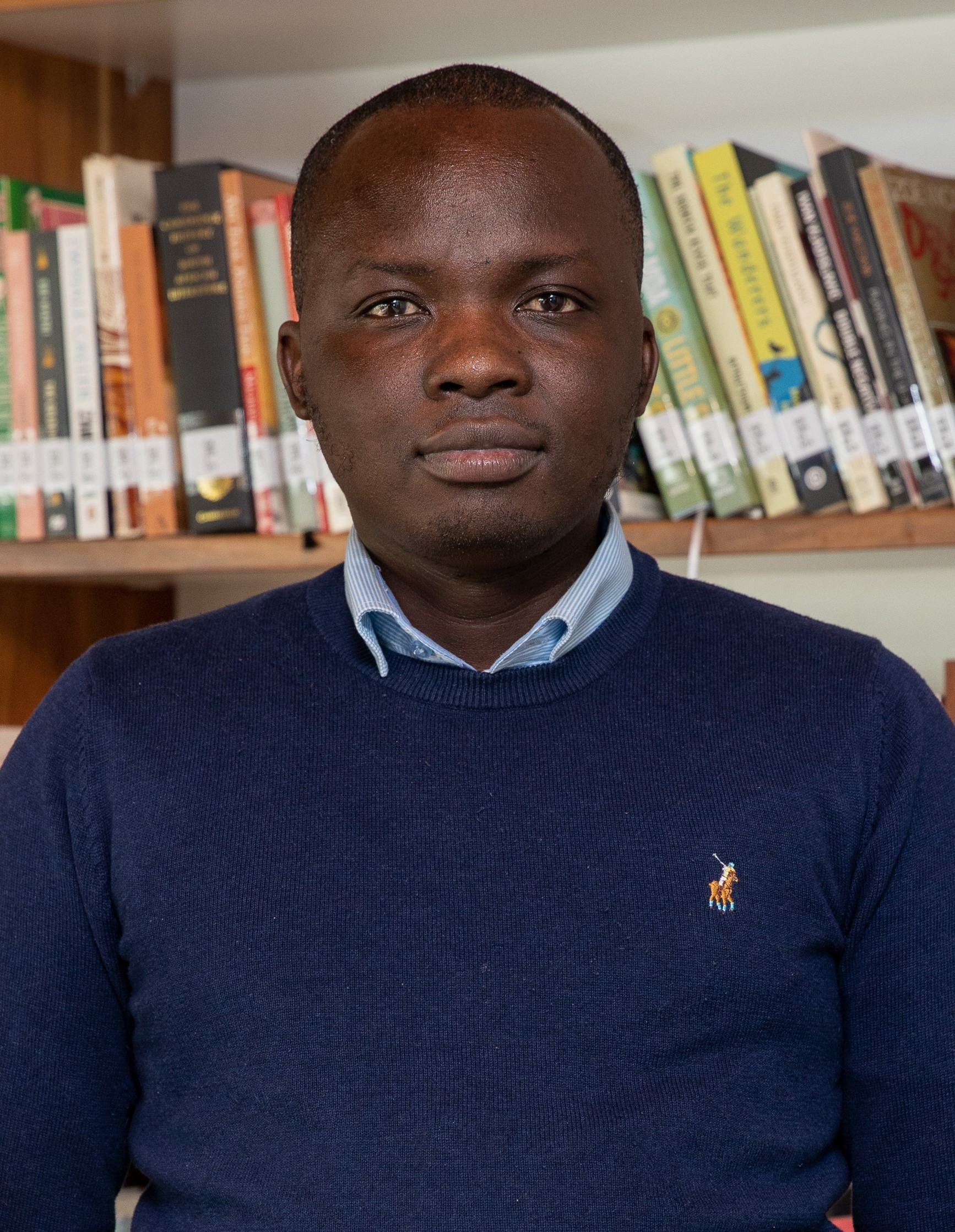
Re-engineering a solution for treating cardiovascular disease - STIAS Public Lecture by Jerry Ochola
I’m aiming to come up with solutions to the problems of cardiovascular diseases which cause high mortality in the developing world by looking into ways to make treatments cheaper, more efficient and accessible to most patients in the poorest corners of our planet.
event
Computational Modelling of Tubular Fibrous Structures for Cardiovascular Graft Applications - STIAS Public Lecture by Jerry Ochola
Register here by 20 September 2022 Jerry Ochola, Senior Lecturer in the Department of Manufacturing, Industrial and Textile Engineering at Moi University, Kenya and Iso Lomso Fellow will present a public lecture with the title: Computational Modelling of Tubular Fibrous Structures for Cardiovascular Graft Applications Abstract The design of tubular structures with desirable internal and external topology represents a challenge for tissue engineering of cardiovascular grafts.
news-article
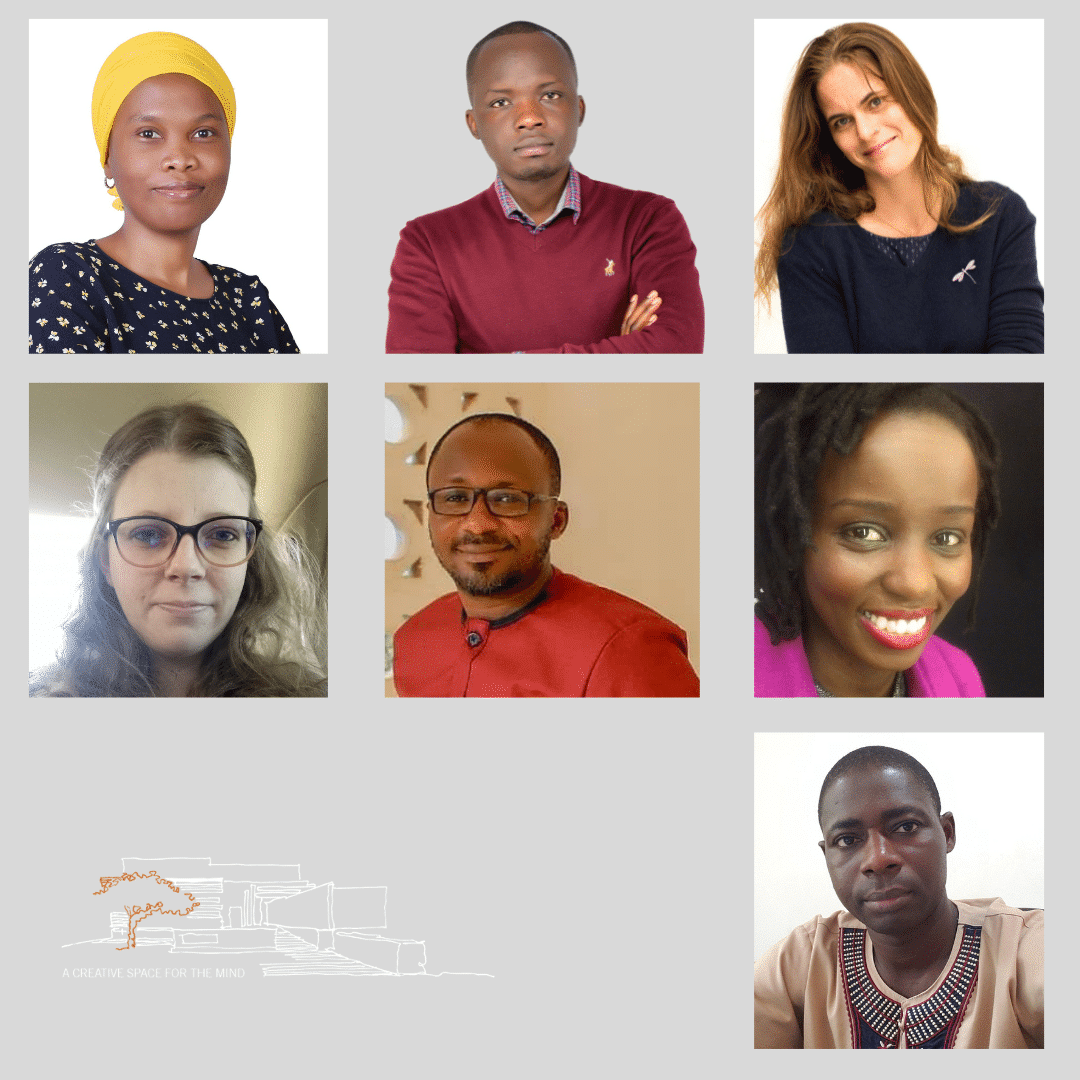
Fifth Iso Lomso cohort of fellows selected
STIAS is pleased to announce its fifth cohort of Iso Lomso fellows for applications submitted during its last call.