Schlebusch, Carina M., Helena Malströom, Torsten Günther, Per Sjödin, Alexandra Coutinho, Hanna Edlund, Arielle R. Munters, Mário Vicente, Maryna Steyn, Himla Soodyall, Marlize Lombard, Mattias Jakobsson. 2017. Southern African ancient genomes estimate modern human divergence to 350,000 to 260,000 years ago. Science. https://doi.org/10.1126/science.aao6266

Southern African ancient genomes estimate modern human divergence to 350,000 to 260,000 years ago
2019
Related to this publication
public lecture / seminar
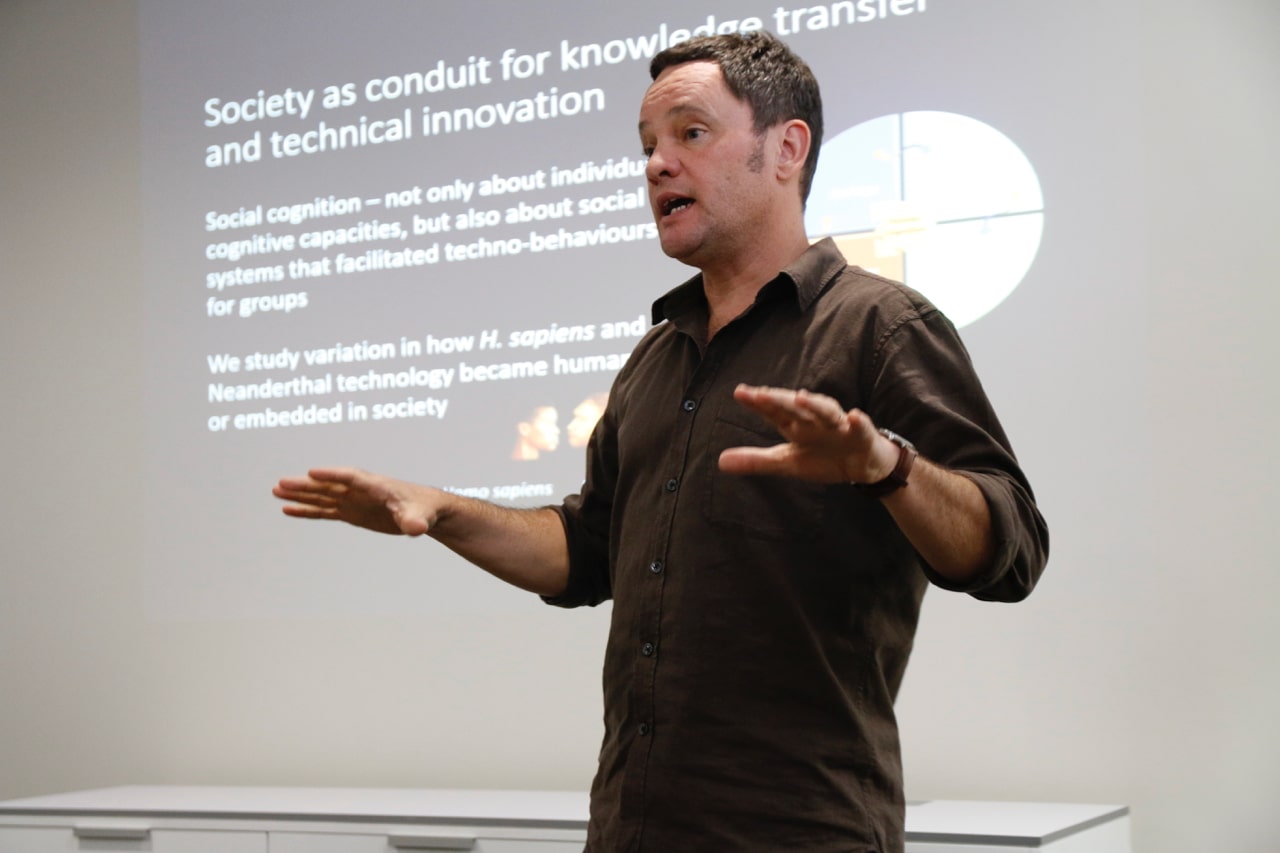
Archaeology of a hungry mind - Fellows' seminar by Marlize Lombard, Anders Högberg and Peter Gärdenfors
We suggest that a useful way to explore the evolution of human cognition between about 300 000 and 50 000 years ago is to think of it in terms of a co-evolutionary feedback loop between aspects of biology, technology, society and ecology.
public lecture / seminar
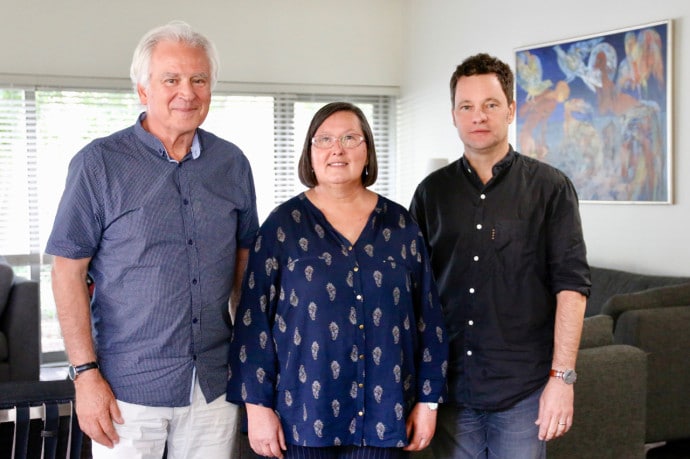
How we learnt to think like humans - Fellows' seminar by Peter Gärdenfors, Marlize Lombard and Anders Högberg
STIAS fellows Peter Gärdenfors, Marlize Lombard and Anders Högberg after their seminar on 29 November 2018 Our expanding knowledge of the hominin tree, in combination with the archaeological record of sub-Saharan Africa and the reconstruction of ancient human genomes change our understanding of human cognitive evolution.

project
Archaeology of a Hungry Mind
Why and how did we (Homo sapiens) evolve into a species that is dependent on its ‘brains’ rather than its ‘brawn’ for our survival and successful spread across the globe?

project
How did Homo sapiens become Homo docens? On the evolution of social learning and teaching during the Paleolithic
The purpose of the project is to analyse why teaching has evolved only in the line leading to Homo sapiens.