
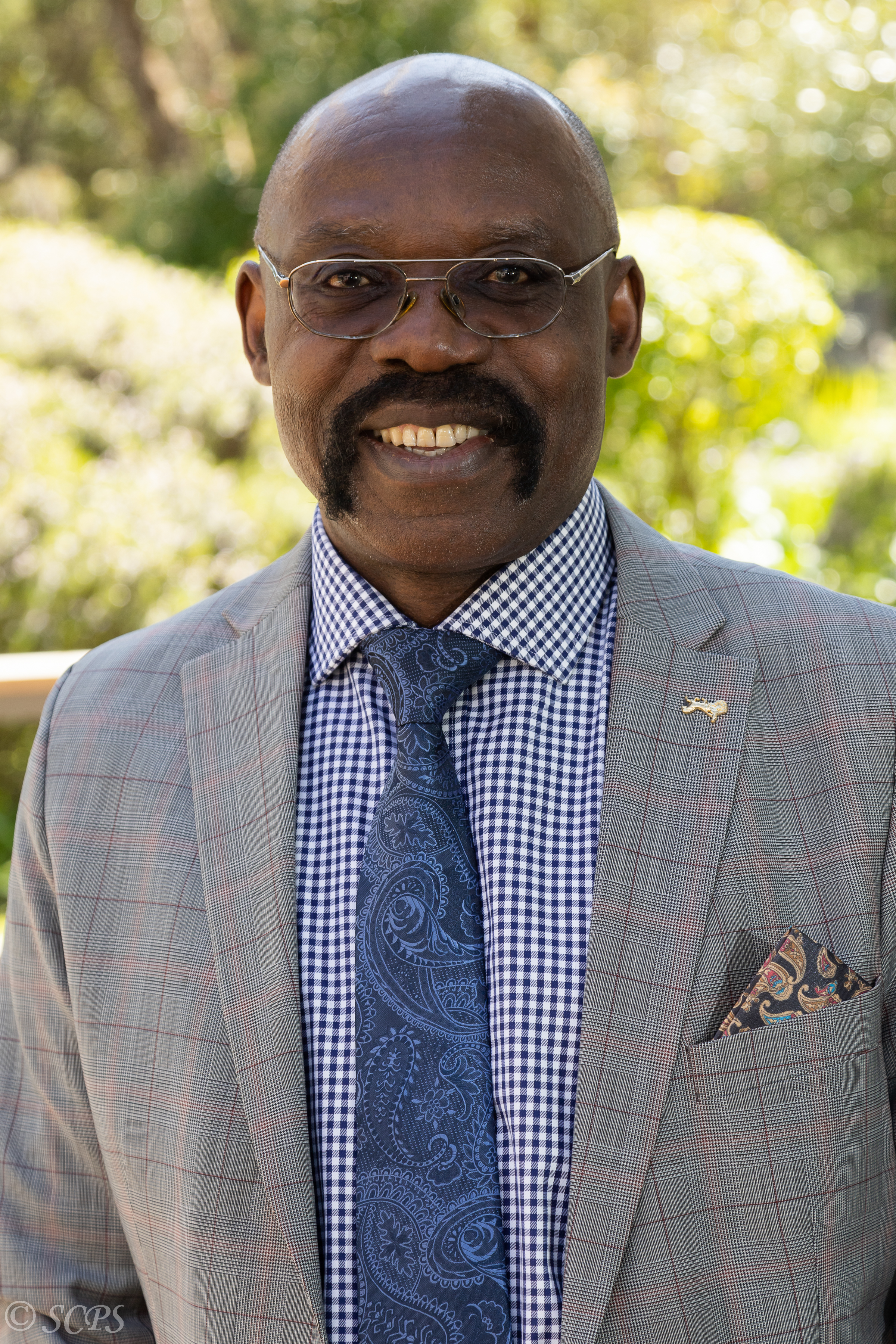
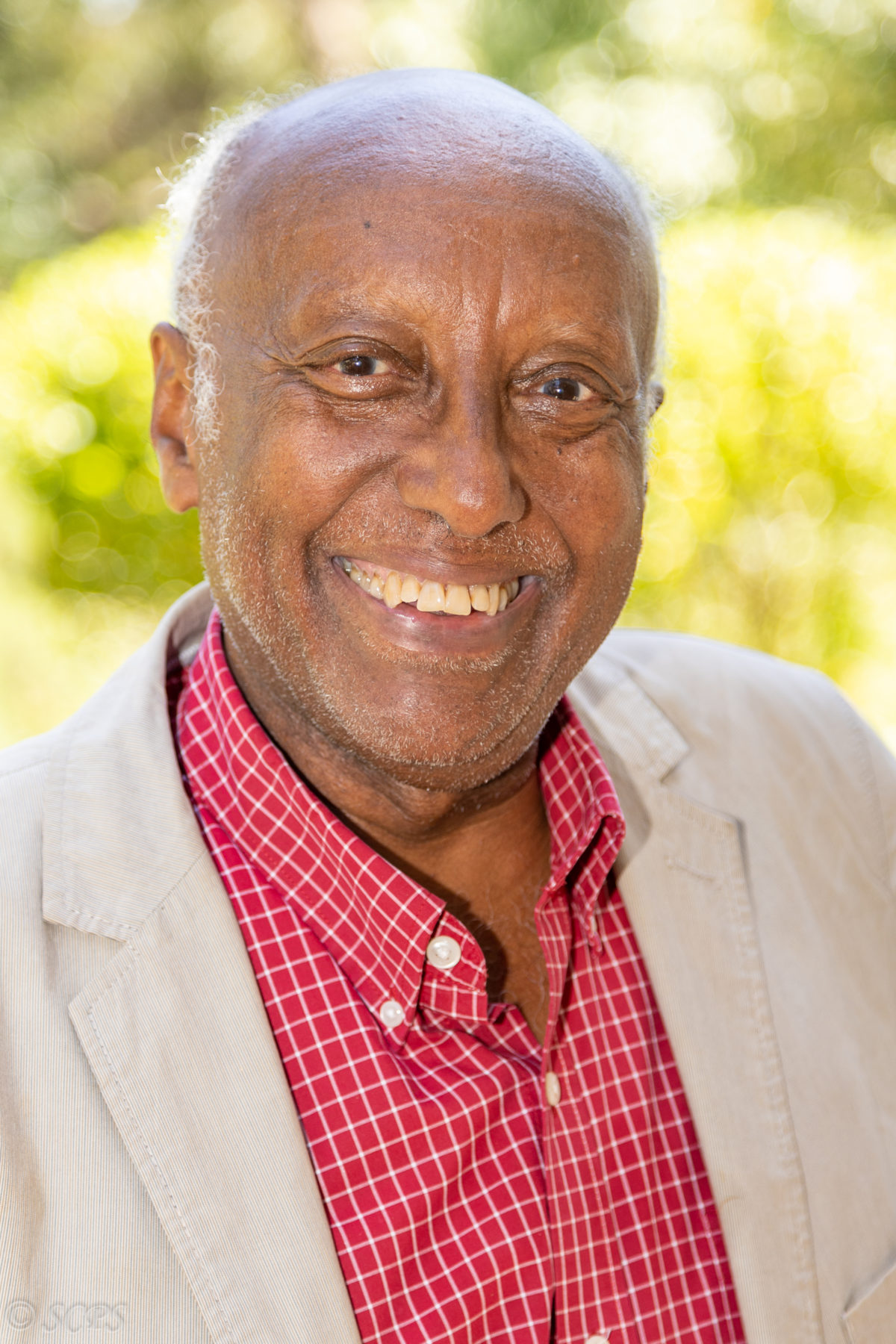
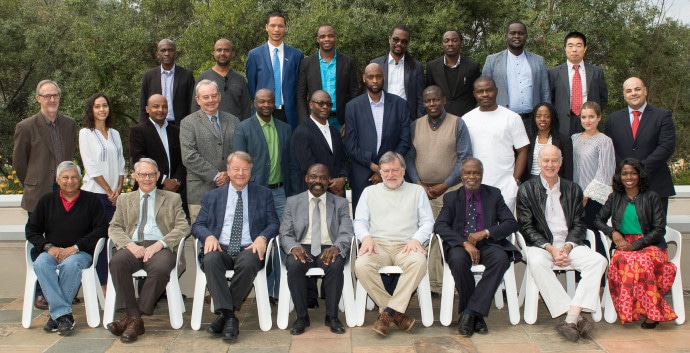
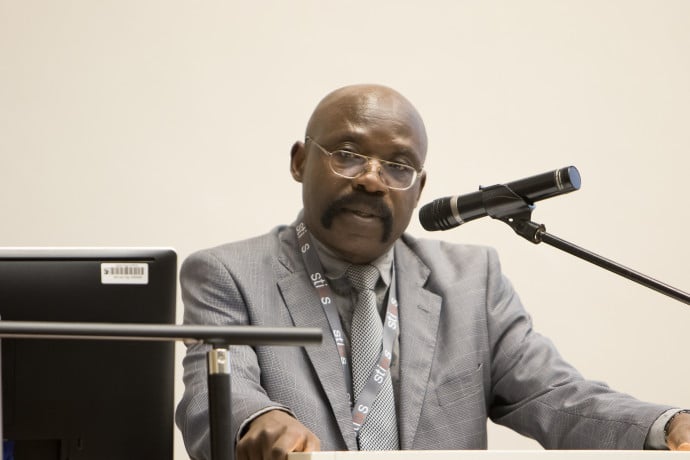
“Corruption is no longer just a simple crime or even just a crime against development but should be ranked amongst crimes against humanity. The relentless persistence of endemic corruption in Africa and the failure since independence to seriously control it poses one of the greatest threats to the on-going faltering attempts to promote a culture of constitutionalism, good governance and respect for the rule of law,” said Prof. Charles Fombad of the Institute for International and Comparative Law in Africa (ICLA), University of Pretoria and STIAS fellow. “This also poses a threat to peace and security on the continent.”
Corruption is one of the biggest threats in Africa today casting a shadow over the continent’s political, economic and social progress. It has been estimated that Africa loses US$ 148 billion each year to corruption.
With this in mind the Fifth Stellenbosch Annual Seminar on Constitutionalism in Africa (SASCA 2017) took place at STIAS from 19 to 22 September 2017 with the theme Corruption and constitutionalism in Africa: Revisiting control measures and containment strategies.
SASCA 2017 was jointly organised by the Institute for International and Comparative Law in Africa (ICLA) of the Faculty of Law, University of Pretoria and STIAS in partnership with the South African Research Chair in Multilevel Government, Law and Policy (SARChI) at the Dullah Omar Institute, University of the Western Cape; and the Konrad Adenauer Stiftung Rule of Law Program for sub-Saharan Africa. The seminar attracted prominent legal scholars and students from throughout Africa, as well as representatives from corruption watchdog organisations. The opening plenary was given by Derek Hanekom, former Minister of Tourism and of Science and Technology in the South African government.
"The loosening of the glue that apartheid provided to keep the ANC rigorous has effectively been replaced by patronage." - David Lewis, Corruption Watch
“Evidence of the unrelenting spread of corruption on the continent clearly suggests that it has become a deep-seated institutional problem that has not been addressed in any effective or sustainable manner,” said Fombad.
The 2015 Transparency International Global Corruption Barometer highlighted that Africa is home to many of the most corrupt countries in the world with the five worst performers - Somalia (176th), Sudan (172nd), South Sudan (170th), Equatorial Guinea (167th) and Chad (165th).
Africa’s challenges as the poorest and least-developed continent with the lowest aggregate level of human development are compounded by the level and impact of corruption.
“The emerging evidence after more than two decades of democratisation in Africa is that corruption does not only co-exist with the so-called democratic or quasi-democratic regimes on the continent but actually fuels them,” said Fombad.
Political space for competitive elections has been progressively eroded by fraudulent and corrupt electoral processes destroying faith in the ballot box, democracy and constitutional governance.
“Effective independent judicial institutions are not only necessary for the existence and sustenance of constitutionalism and democratic governance but also vital for its consolidation,” he said.
Most African countries have enacted a wide range of legislation that criminalises corruption but often with little effect because judiciaries are corrupt and ill-equipped; the legal framework in many countries is defective; anti-corruption laws are not enforced by government officials; and, corrupt leadership lacks the will, moral authority and credibility to lead an effective fight against corruption.
“My thief is different from your thief. We should be willing to adapt the approach to the specific fight and learn to frame our narratives in common language that resonates with the person on the street.” - Chinedu Nwaga, Nigeria Anti Corruption and Criminal Justice Fund, Trust Africa
Fombad emphasised that there can be no constitutional justice without social and economic justice.
He outlined basic principles for a constitutionally entrenched anti-corruption legal framework. These include entrenching anti-corruption principles and institutions in the constitution; the need to criminalise all forms of corruption; establishing standards of integrity and transparency for public officers; the right of individual and collective action for the removal from office, trial and prosecution of public officials alleged to be involved in corruption; exclusion of persons convicted of corruption from the benefit of any pardons or amnesties; protection of those who report corruption and punishment for those who negligently or deliberately refuse to report corruption; examining the assets of public officials; and, instituting higher penalties for members of the judiciary, the police, the armed forces and custom services for offences involving corruption and corrupt activities.
Fombad pointed to the advent of institutions of accountability, which started with South Africa’s Chapter 9 institutions in 1996 and were continued in the Kenyan and Zimbabwean constitutions of 2010 and 2013, as significant steps forward. “These institutions can and do play a very important role in the fight against corruption by way of policy, analysis and technical assistance in prevention, public outreach and information, monitoring, investigation and prosecution,” he said.
“Civil society is the last resort when the state fails – it should be the first resort. All the other sectors depend on an active, demanding civil society.” – David Lewis, Corruption Watch
In-depth discussions
The seminar approached the discussion of the impact of corruption on constitutionalism, good governance and rule of law in Africa from three aspects. Firstly, whether the constitutional and legislative frameworks for combating corruption are sufficiently robust. Secondly, what formal and informal institutions have been established for dealing with corruption? What are they, what are their roles and why have they not been very effective? And, thirdly, the processes and measures used to prevent, detect, punish, control and eradicate corruption. Why are these not working? What needs to be done to strengthen public accountability, limit avenues for corruption and bolster constitutionalism and good governance? These aspects were discussed in presentations outlining case studies from Ghana, Kenya, Zambia, Nigeria, Ethiopia, Algeria, Morocco, Egypt, Zimbabwe, Botswana, Malawi and South Africa.
“South Africa today incarnates the magnitude of the challenge we face: with what is arguably the best constitution in the world and by all standards Africa’s standard bearer towards a new era of constitutionalism and respect for the rule of law, it is now a captured state,” said Fombad. “In spite of extensive checks and balances, rampant corruption by the elites has reduced it to one of the most unequal societies in the world. Increasing economic inequality and exclusion will soon lead to political exclusion and repression.
“Trust has been eroded to the point that people believe easy promises. We must do everything in our power to address the erosion of trust in the constitution and rule of law.” – Johann Groenewald, STIAS
“It is fast transforming democracy into corruptocracy and constitutionalism into corruptionalism.”
“But,” he added, “these things can change.”
All the papers presented during the seminar will be peer-reviewed for publication in the fourth volume of the series, Stellenbosch Handbooks in African Constitutional Law, to be published by Oxford University Press.
Words: Michelle Galloway, Part-time media officer at STIAS
Photographs: Anton Jordaan

